
2027 KITCHEN WORKTOP MATERIALS GUIDE
Choosing a kitchen worktop is one of the most important decisions in the kitchen renovation process, because the surface you land on will shape the character of the room, dictate what colour palettes can be incorporated, carry the daily wear of daily life, and sit at the centre of almost everything that happens in your home. With so many natural and man-made materials on the market, it can be difficult to compare them like for like, especially when every showroom seems to champion a different favourite.
Below, we've broken down the most popular worktop materials for 2027 and beyond into an easy comparison, covering how each one looks, how it performs day to day, and who it tends to suit best, so you can make a choice that fits your household, your desired design and your daily needs rather than simply following the trend of the moment.
If you would like help in planning your kitchen renovation, our team of skilled designers and craftsman can help guide your every design decision and handcraft every bespoke feature to help bring your dream kitchen to life.
WHAT TO THINK ABOUT BEFORE YOU CHOOSE
Before comparing individual materials, it helps to weigh up a few practical factors that will influence which surface is right for your kitchen:
Daily wear: Will the surface face heavy chopping, hot pans, and spills, or is it in a lower-traffic area?
Upkeep: Are you happy to reseal a stone worktop each year, or would you rather something that needs almost no attention?
Look and feel: Are you drawn to the warmth of natural wood, the drama of veined stone, or a clean, uniform surface?
Budget: Material, fabrication, and installation costs can vary enormously between options.
Household habits: A busy family kitchen has very different needs to a quiet, occasional-use space.
With those factors in mind, here's how the leading worktop materials measure up.
NATURAL STONE WORKTOPS
GRANITE
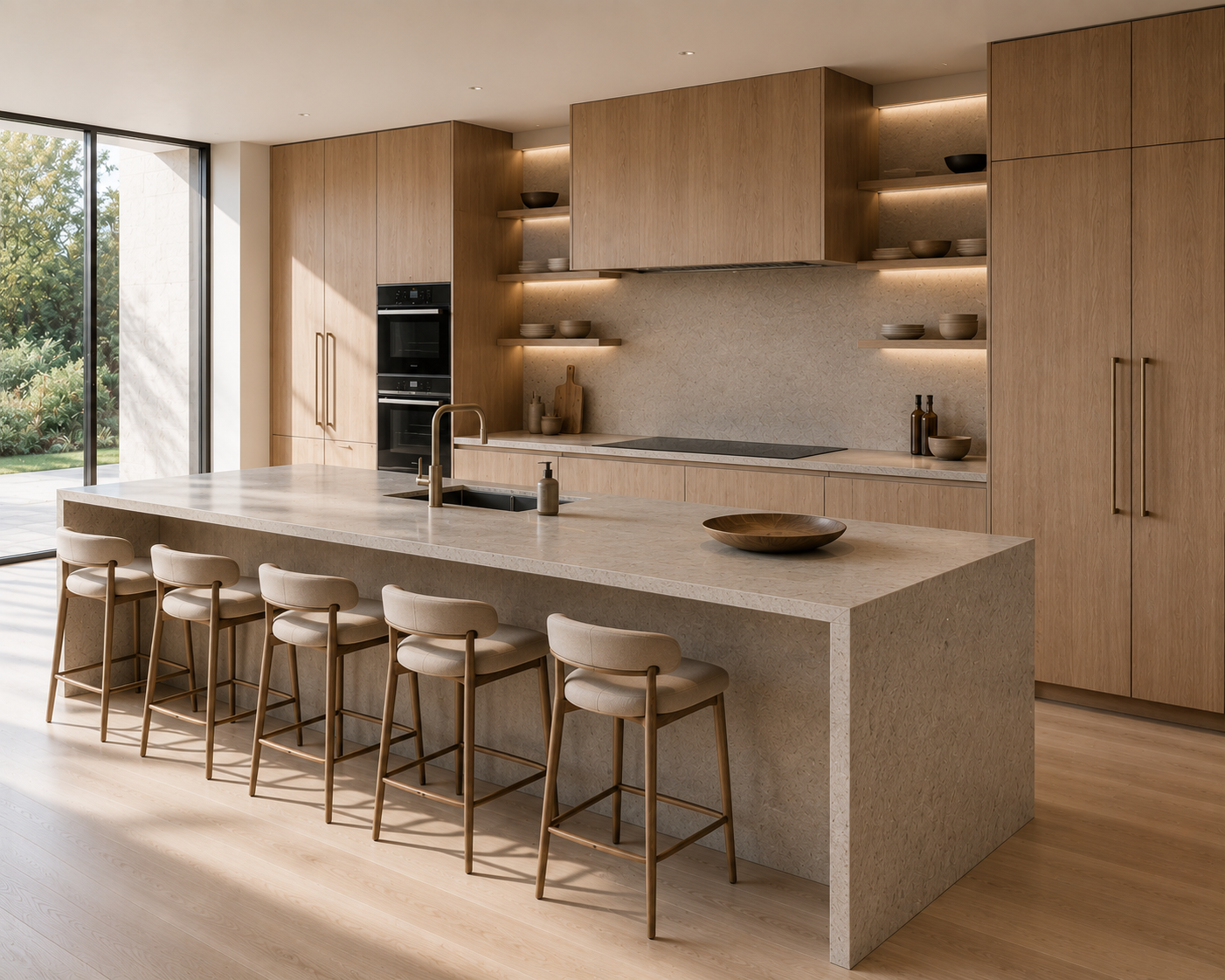
Granite is quarried directly from the earth, which means every slab carries its own unique pattern of colour and mineral flecking that no two kitchens will ever quite share.
Pros: Highly heat-resistant, hard-wearing, and full of natural character
Cons: Needs annual sealing to guard against staining, and costs can rise quickly for rarer colourways
Best for: Busy households that want a one-of-a-kind stone with strong heat tolerance
MARBLE
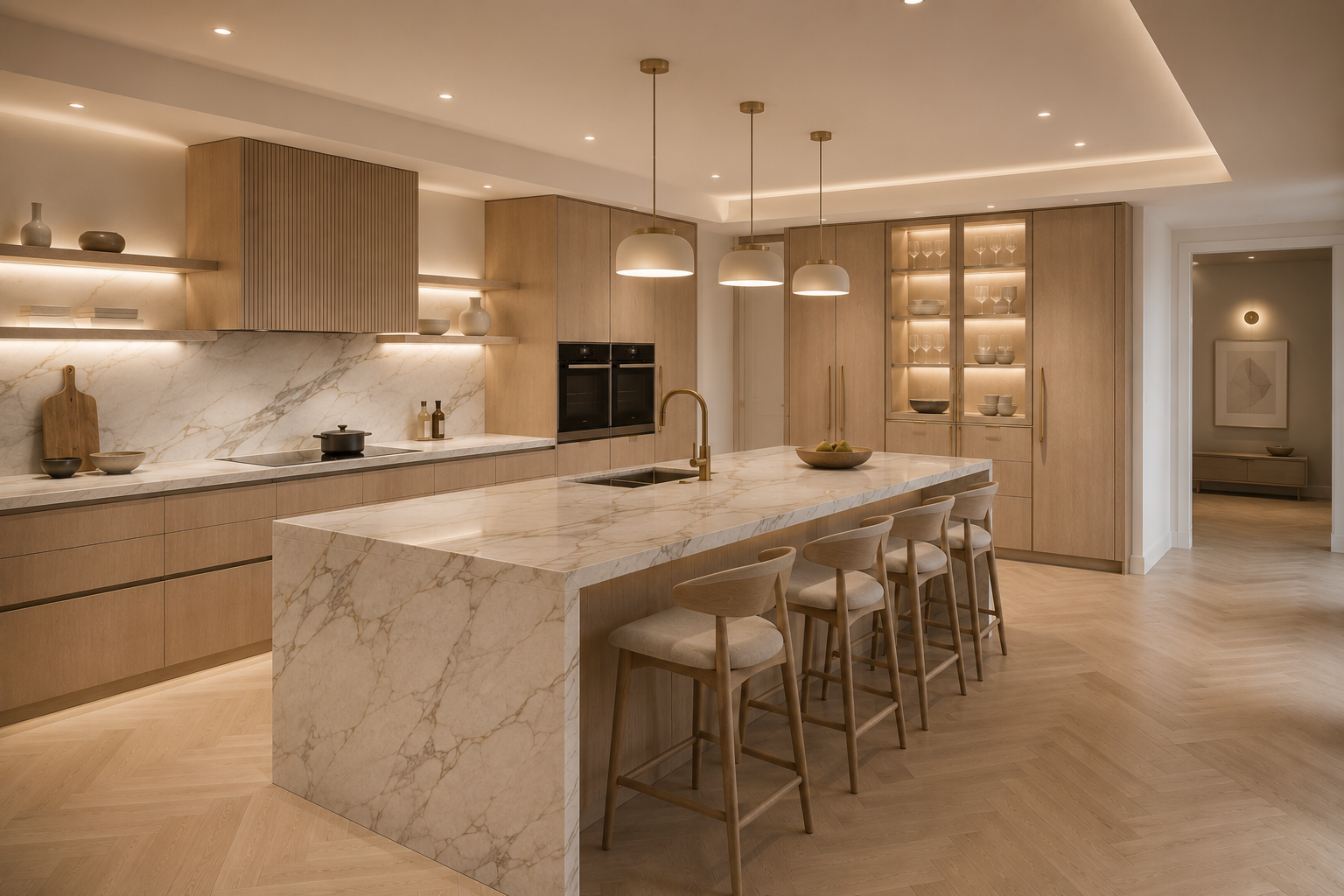
Marble has long been the benchmark for timeless luxury, prized for its soft, flowing veining and the cool, smooth surface that makes it a favourite among home bakers.
Pros: Unmatched classic appearance, cool to the touch, and every slab is entirely unique
Cons: Porous and soft compared with other stones, so it's vulnerable to staining and etching from acidic spills like lemon juice or wine
Best for: Elegant, lower-traffic kitchens where appearance takes priority over heavy daily use
QUARTZITE
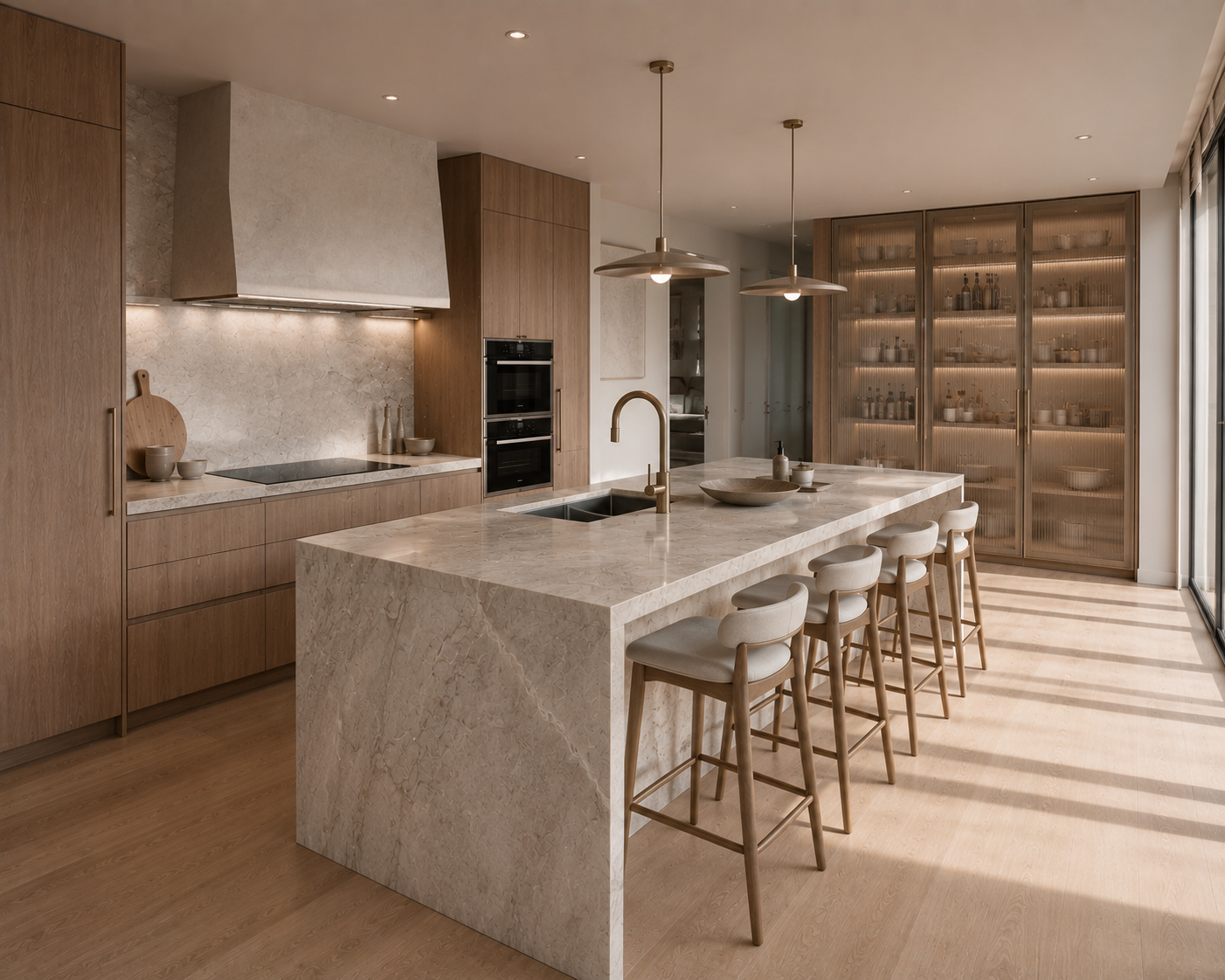
Quartzite is often mistaken for marble at first glance, thanks to its similarly soft veining, but it's a considerably harder, more durable stone underneath.
Pros: Combines the visual softness of marble with the strength closer to granite, and holds up well in bright or sun-facing kitchens
Cons: Its density makes it costly and technically demanding to fabricate, and colour choices are more limited than granite
Best for: Homeowners who love the marble look but need a worktop that can handle a busier kitchen
TRAVERTINE
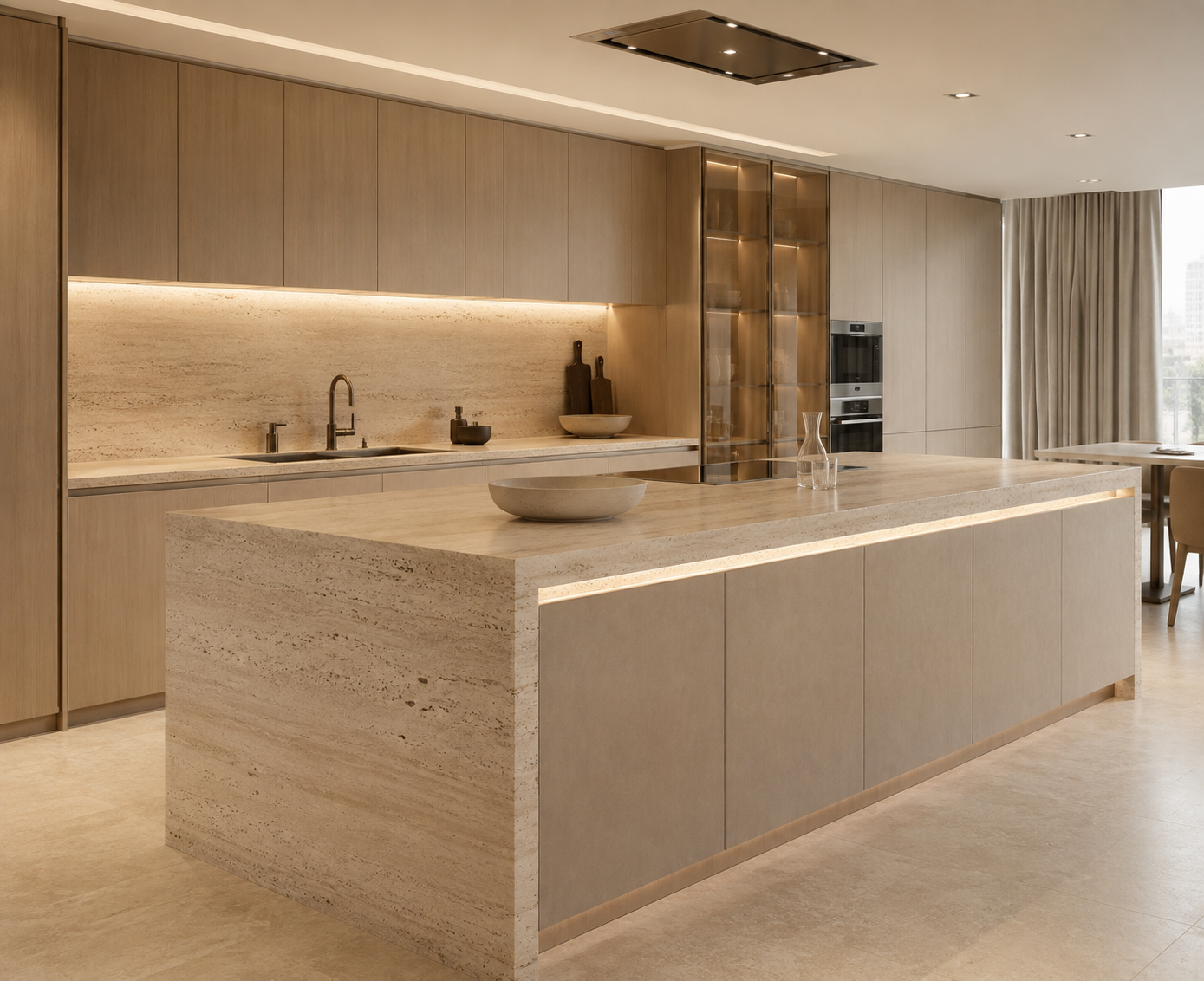
Travertine brings a warm, old-world texture to a kitchen, with a naturally pitted surface that gives it a distinctive, tactile character.
Pros: Beautiful warm, earthy tones, and a texture that feels genuinely different from polished stone
Cons: Notably softer than granite, and needs diligent sealing along with immediate clean-up of any acidic spills
Best for: Characterful, rustic-leaning kitchens where texture matters as much as colour
LIMESTONE
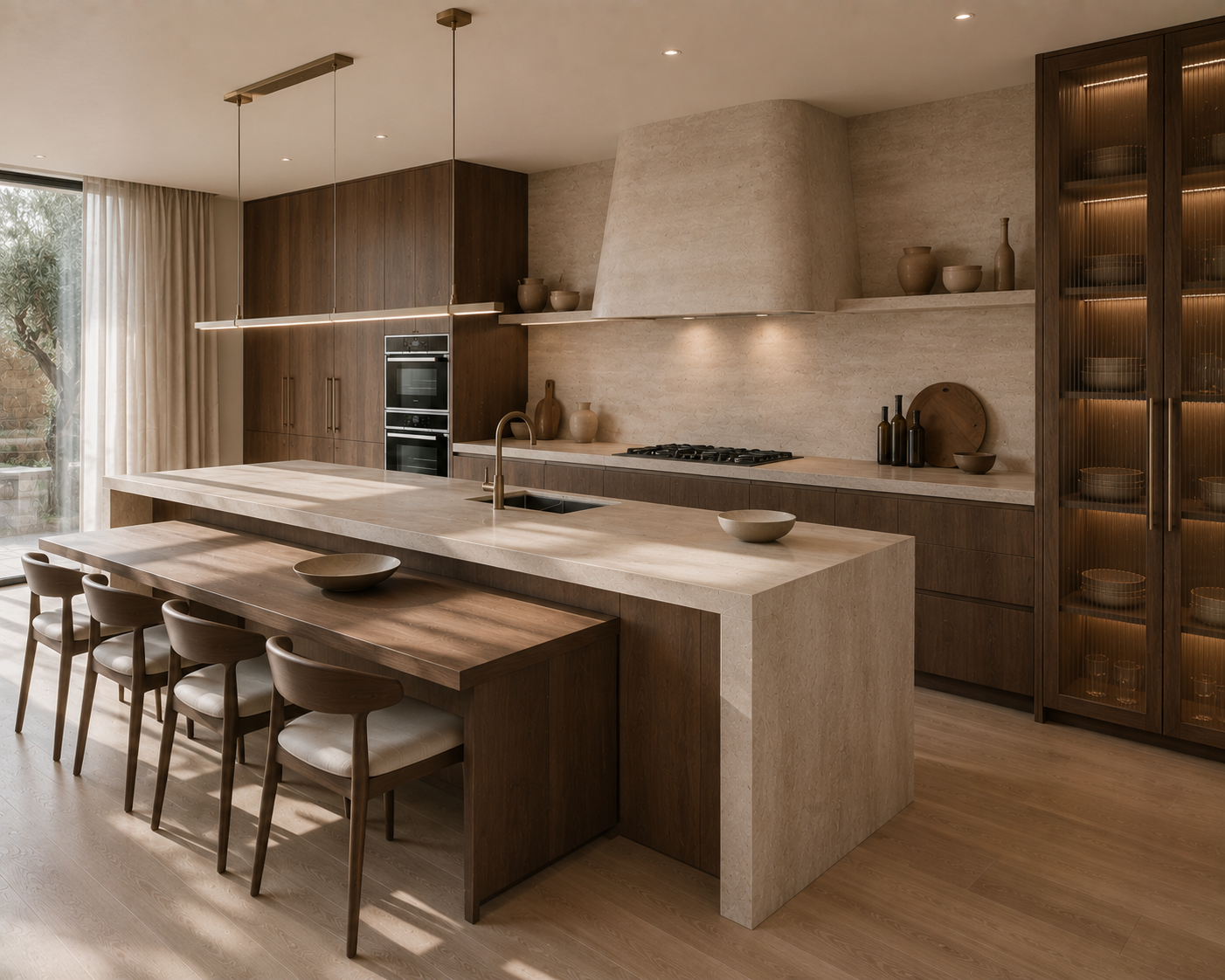
Limestone offers a soft, muted look that brings a gentle, understated elegance to a kitchen without ever feeling cold.
Pros: Naturally soft, warm appearance, and a good tolerance for heat from pots and pans
Cons: Porous and prone to scratching or staining, so it needs frequent sealing to stay looking its best
Best for: Homeowners after a subtle, natural aesthetic in a kitchen that sees gentler daily use
SOAPSTONE
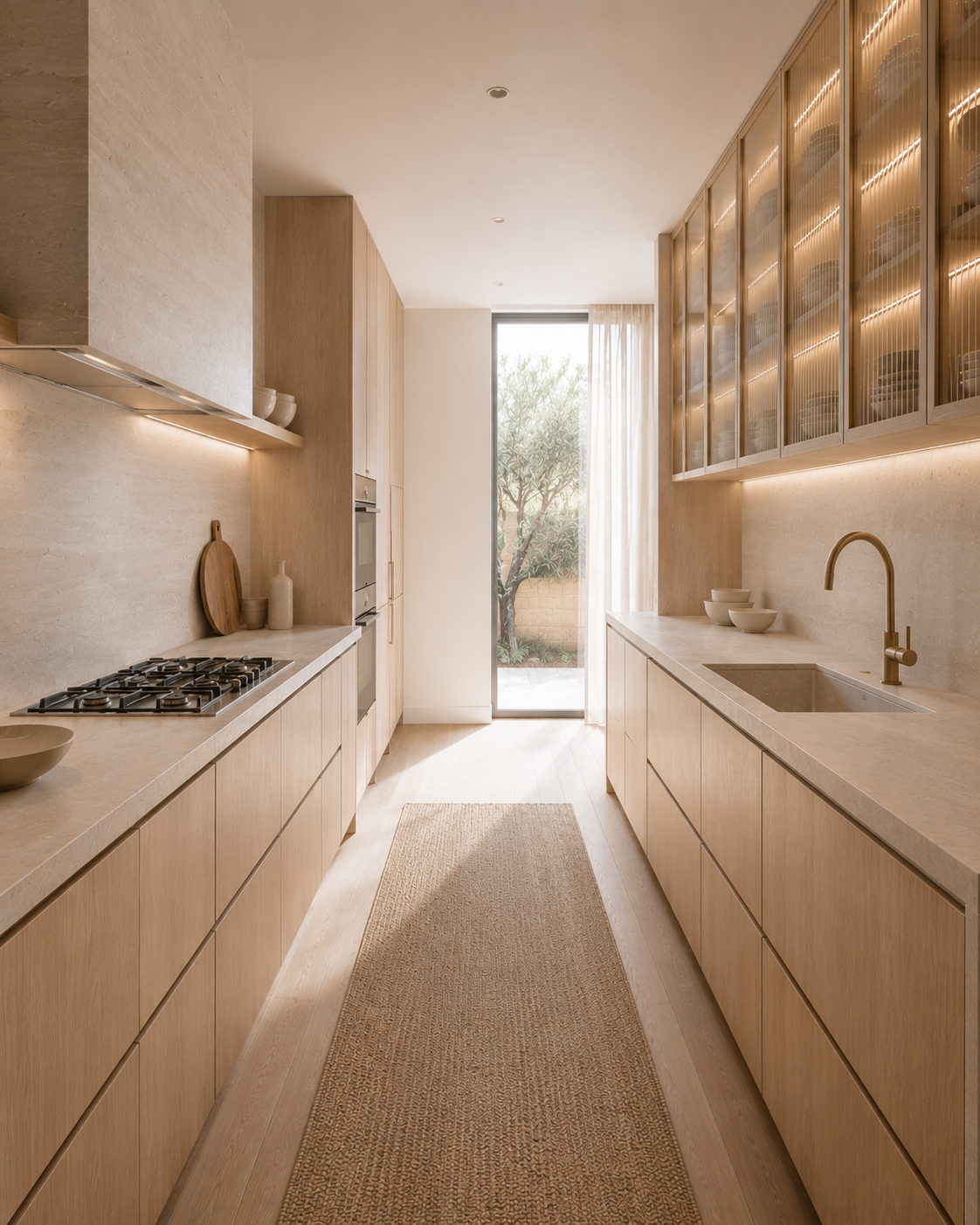
Soapstone has a smooth, almost soft-touch surface that deepens in colour over time, developing a rich, aged patina the longer it's lived with.
Pros: Naturally non-porous, so it resists staining without sealing, and its ageing character is part of the appeal rather than a drawback
Cons: Softer than granite or quartz, so it can scratch or chip, and colour choice is limited to muted greys and greens
Best for: Traditional or farmhouse-style kitchens where a worktop that changes character over the years feels like a bonus
MAN-MADE STONE WORKTOPS
QUARTZ
Man-made quartz combines crushed natural quartz crystals with resin to create a surface that offers much of the beauty of natural stone alongside far greater consistency.
Pros: Non-porous and highly resistant to staining and bacteria, with an enormous range of colours and patterns to choose from
Cons: Less heat-tolerant than granite, so trivets are still recommended for very hot pans, and it sits at the higher end of the price range
Best for: Busy family kitchens that want the reliability of a low-maintenance surface without sacrificing choice of colour
PORCELAIN
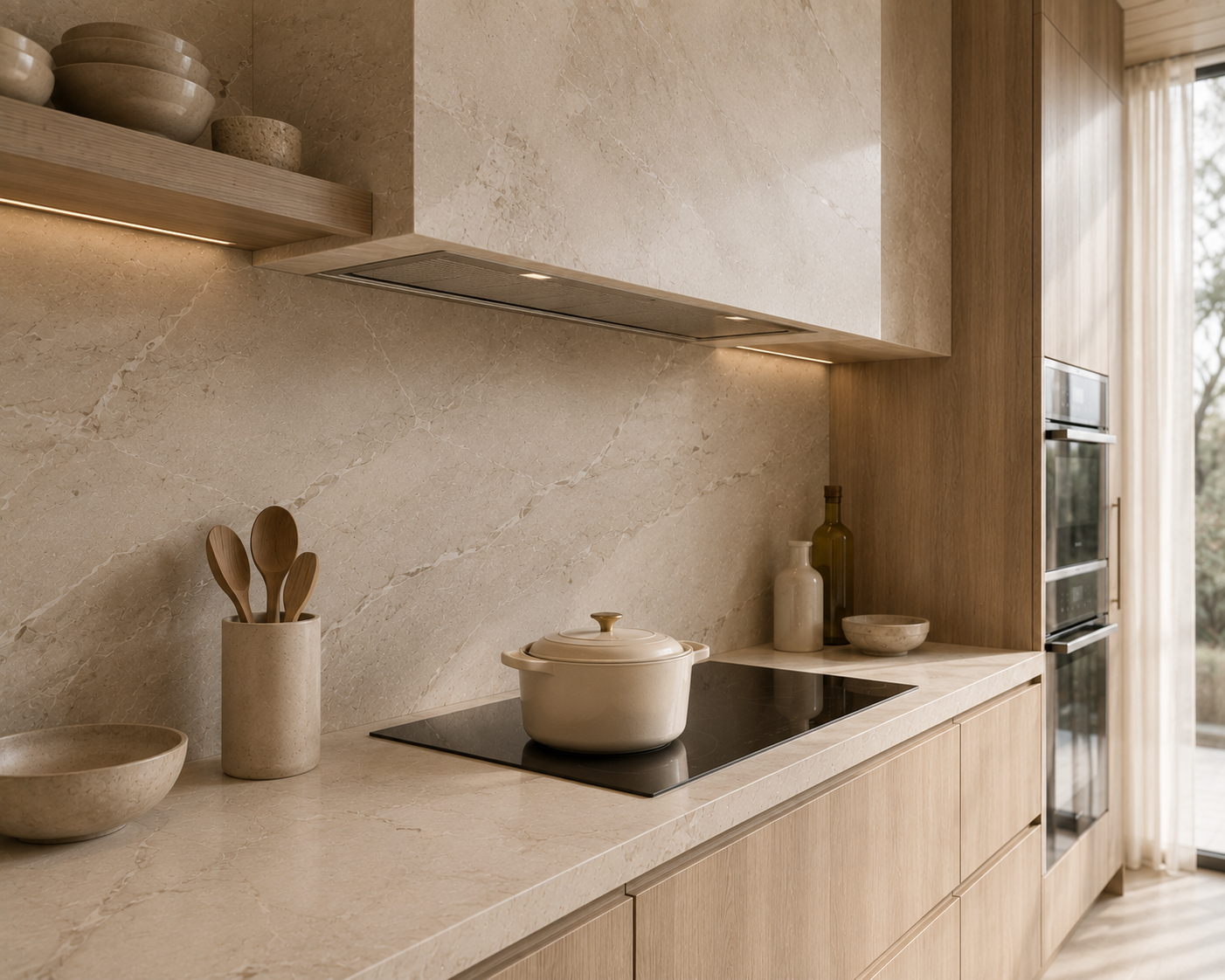
Porcelain worktops are manufactured from refined clay fired at extremely high temperatures, producing large, slim panels that are almost entirely impervious to moisture.
Pros: Outstanding resistance to heat, scratching, and UV fading, making it a strong choice for sun-drenched kitchens or indoor-outdoor spaces
Cons: Its brittleness during fabrication means it needs specialist, experienced installers, and edge profile options are more limited
Best for: Contemporary kitchens, especially those opening onto a garden or outdoor entertaining area
SINTERED STONE
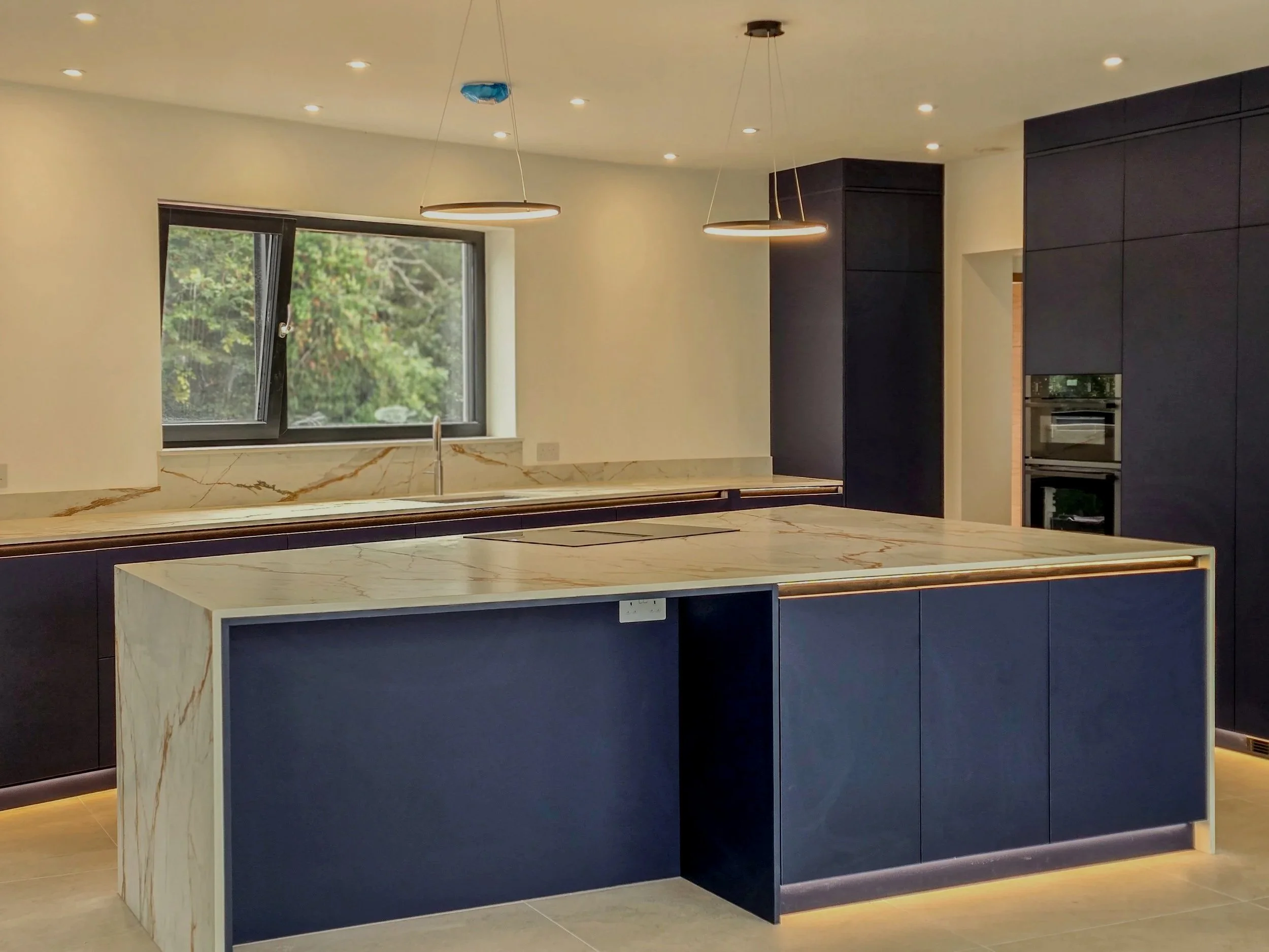
Sintered stone is created through an intensive heat and pressure process that mimics the natural formation of stone in a fraction of the time, resulting in an exceptionally dense, resilient surface. Dekton is the best known name in this category, and it's become a popular choice among homeowners wanting the reassurance of a well-established brand alongside the material's natural strengths.
Pros: Among the most heat and scratch-resistant materials available, and completely non-porous
Cons: A higher-cost option, and like porcelain, requires specialist handling during fabrication and fitting
Best for: Households wanting the lowest possible maintenance without compromising on strength or looks
SOLID SURFACES
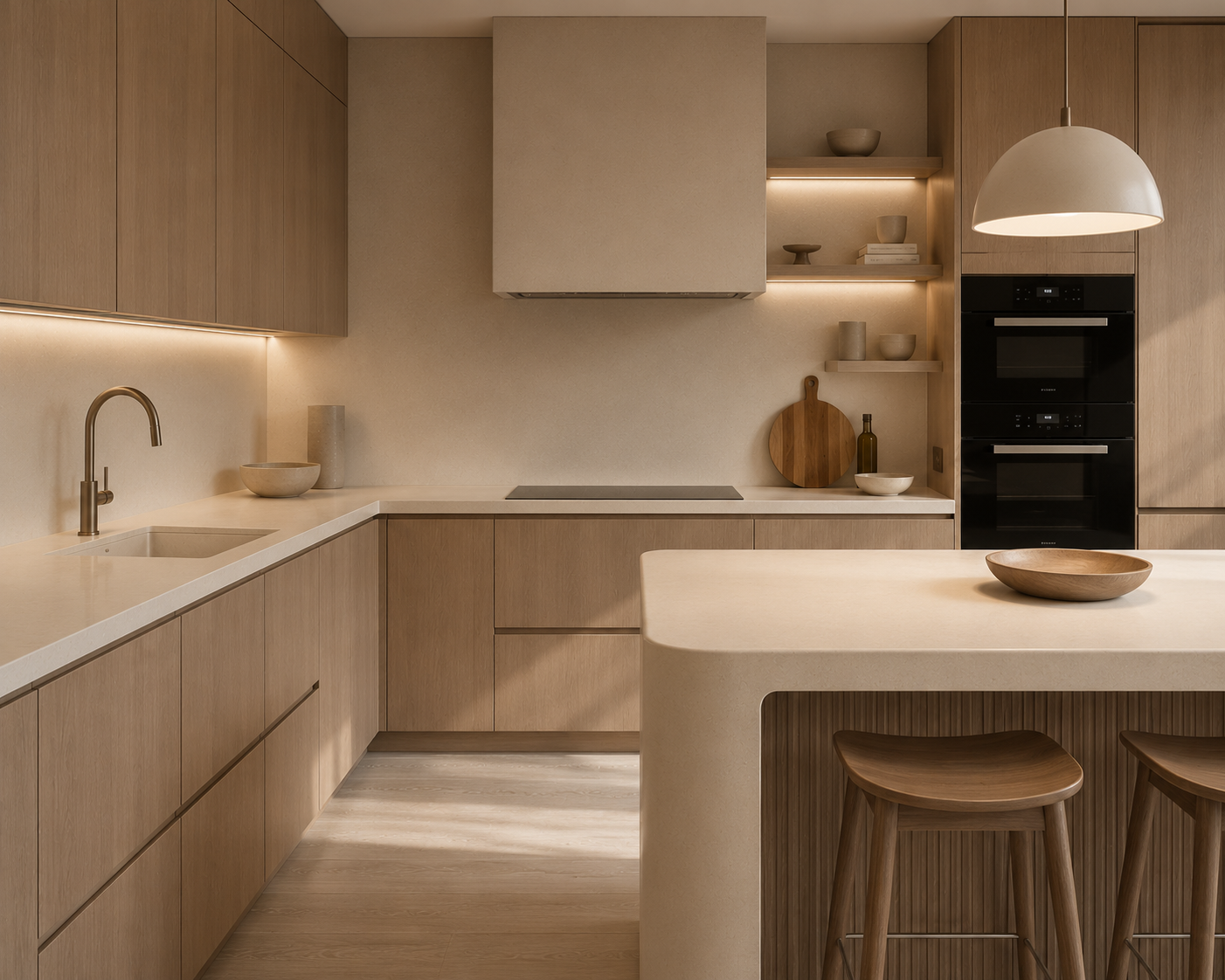
Solid surface materials, such as Corian, are made from a blend of acrylic polymer and natural minerals, formed into a smooth, seamless worktop with no visible joins.
Pros: Completely seamless installation, easy to repair if scratched or damaged, and simple to shape into curves or integrated sinks
Cons: Sensitive to heat, so hot pans need a trivet, and it doesn't carry the same natural depth as real stone
Best for: Sleek, modern kitchens where a smooth, uninterrupted surface is the priority
LAMINATE
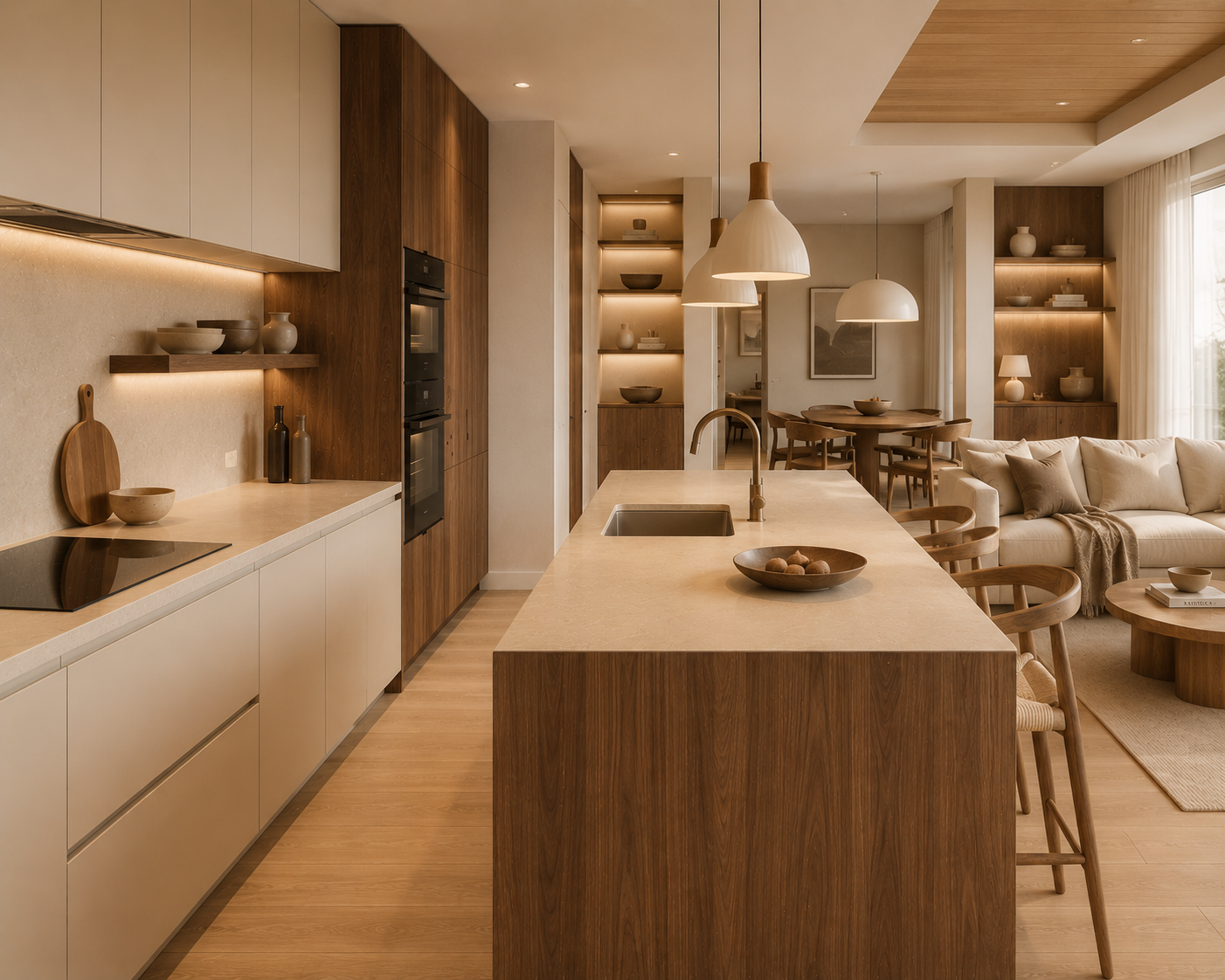
Laminate worktops have moved on considerably from their dated reputation, now offering a wide range of realistic finishes at a fraction of the cost of stone.
Pros: The most budget-friendly option by some distance, easy to keep clean, and available in an enormous range of patterns
Cons: Vulnerable to scratches, burns, and general wear over time, and generally lacks the depth of a natural or man-made stone
Best for: Budget-conscious renovations, rental properties, or kitchens being refreshed on a tighter timeline
WOOD, METAL, AND OTHER SURFACES
BUTCHER BLOCK AND WOOD
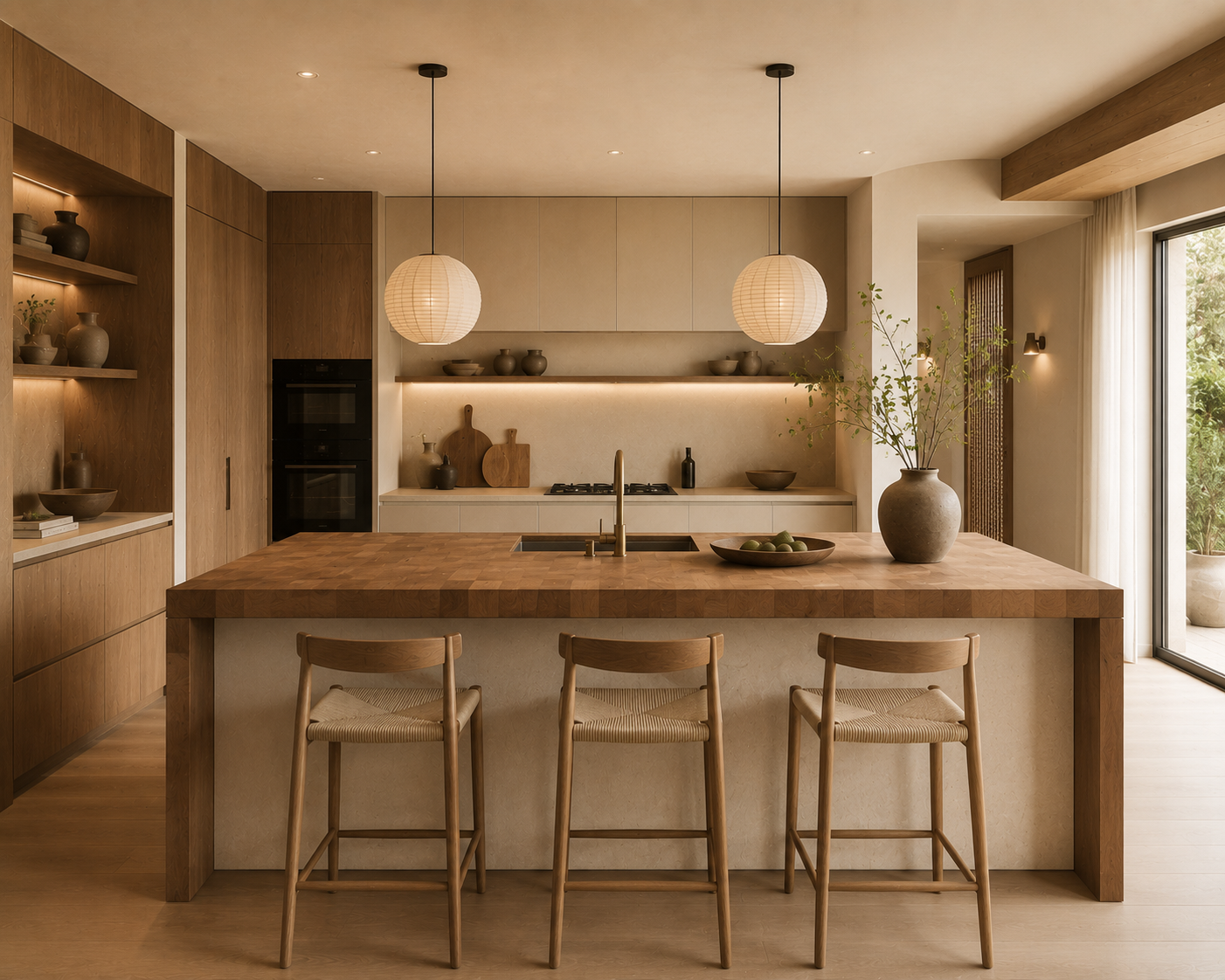
A solid wood worktop brings a warmth to a kitchen that no stone or man-made surface can quite replicate, softening the room and pairing beautifully with almost any cabinetry style.
Pros: Brings soft warmth and natural texture, and can be sanded back and refinished if it becomes worn or marked
Cons: Needs regular oiling to prevent drying and warping, and isn't naturally water-resistant, so spills need to be wiped up promptly
Best for: Cosy, characterful kitchens, or as a mixed-material island top alongside a stone perimeter
CONCRETE
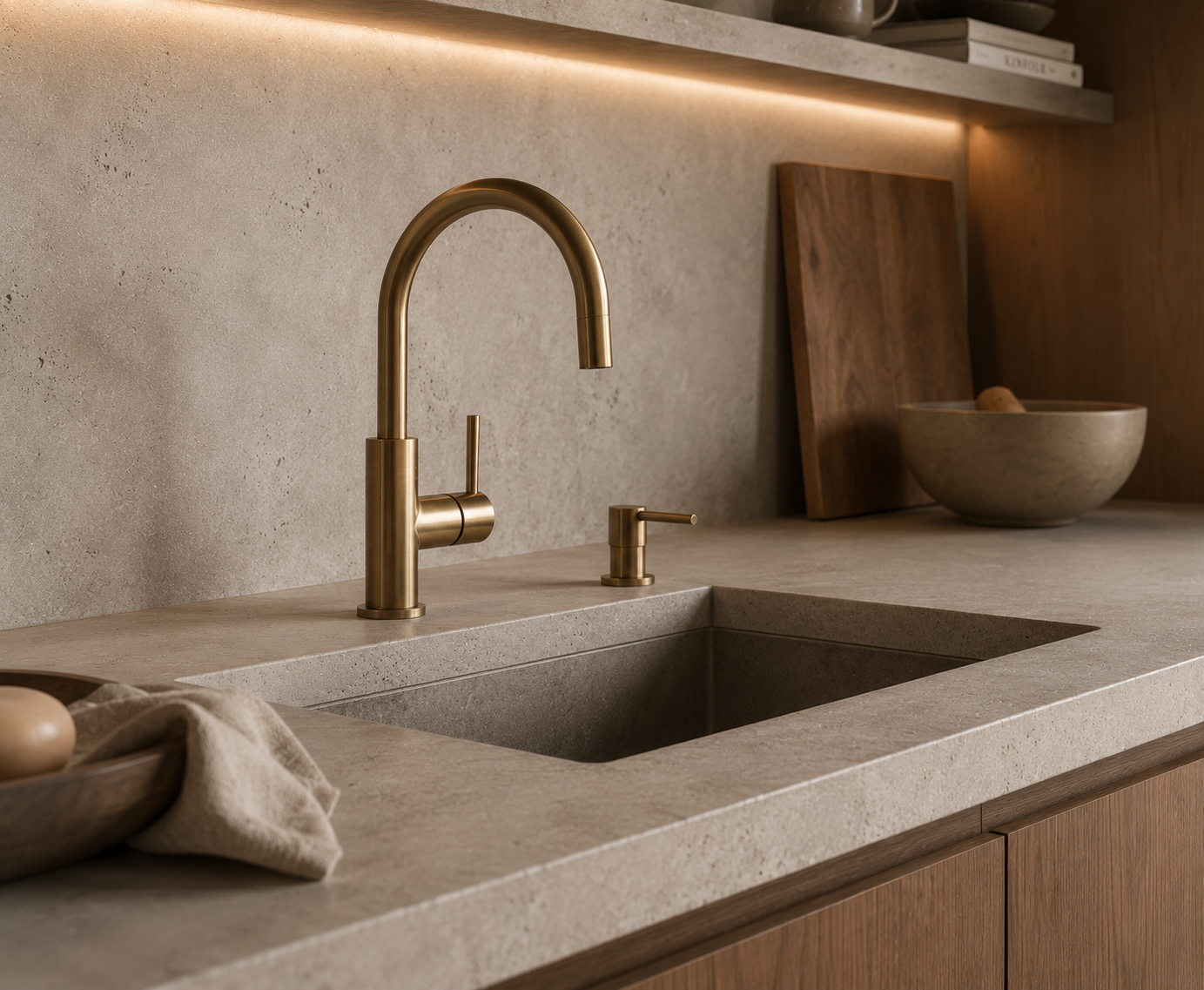
Concrete worktops are cast and finished by hand, giving each one a uniquely individual, industrial character that develops its own patina over time.
Pros: Fully customisable in shape, colour, and texture, and tolerant of high heat from pots and pans
Cons: Heavy enough to require reinforced cabinetry underneath, and can develop hairline cracks if not properly sealed and maintained
Best for: Contemporary, design-led kitchens where a bespoke, one-off surface is part of the brief
STAINLESS STEEL
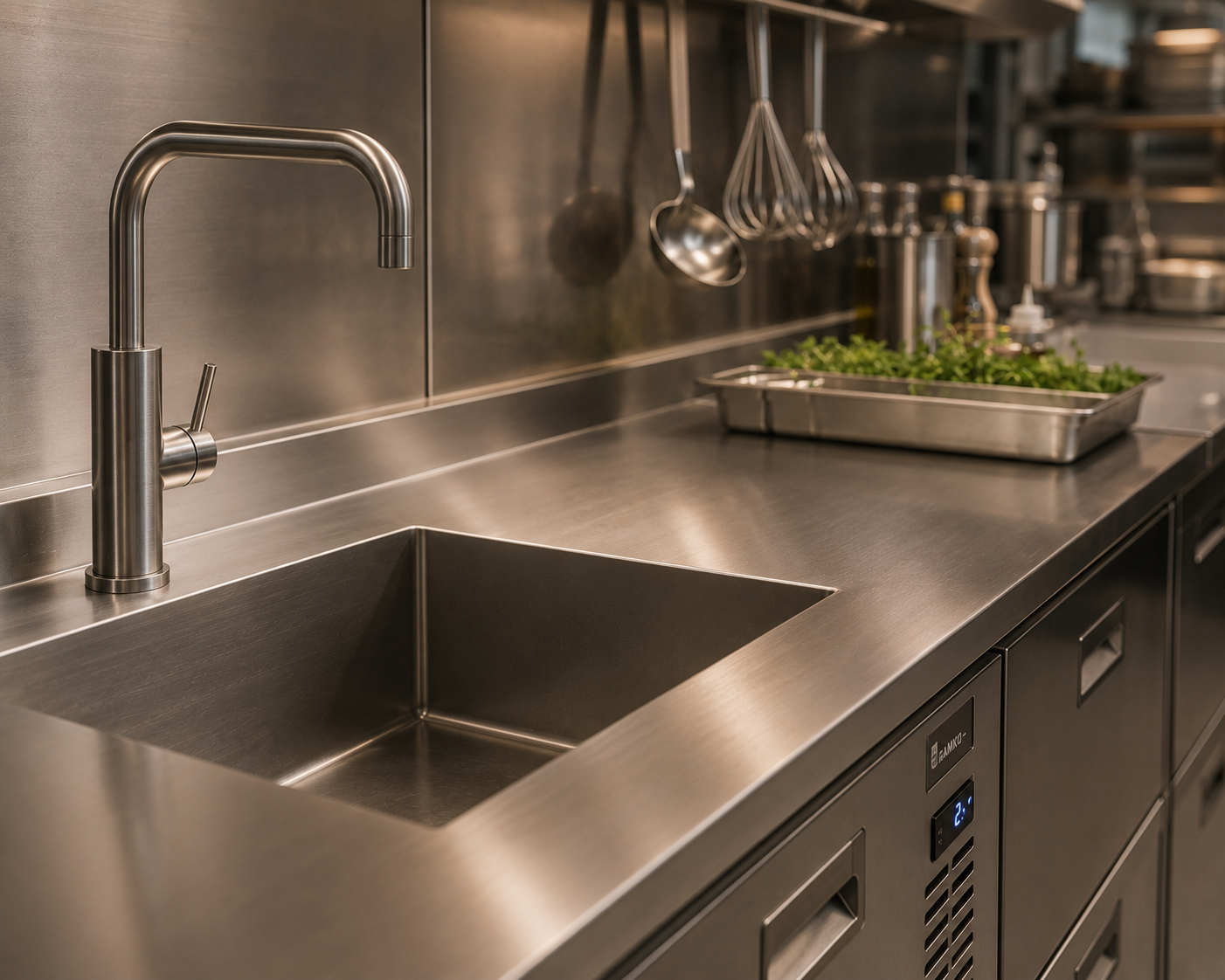
Stainless steel brings a clean, professional edge to a kitchen, drawing on the same durable surfaces used in commercial catering environments, which is primarily when most would choose this finish.
Pros: Extremely heat-resistant and easy to keep hygienic, with a distinctive, contemporary appearance
Cons: Shows fingerprints and scratches more readily than other materials, and isn't to everyone's taste in a family setting
Best for: Modern or industrial-style kitchens, particularly for keen home cooks who want a truly hard-wearing prep surface
CHOOSING THE RIGHT WORKTOP FOR YOUR DEVON KITCHEN
There's no single "best" worktop material, only the material that's best suited to how you actually live in your kitchen, and that's exactly the conversation we have with every homeowner at the start of a project. Our dedication to handcrafted excellence means we take the time to understand your household's daily habits, from busy family cooking through to quiet weekend baking, before recommending a surface that will truly suit your lifestyle and align with your preferences and your desired end vision.
Tom Stokes brings over 15 years of design and craftsmanship experience across New Zealand and the UK to every worktop recommendation, and it's this unmatched design expertise, paired with our attention to detail, that ensures each surface we fit works in harmony with the rest of your bespoke kitchen design which we uniquely handcraft specifically for you.
Whatever material you choose, from a book-matched natural stone to a warm solid wood island top, each is handmade in our Devon workshop. Our small team of designers and craftsmen bring the same unparalleled craftsmanship and unwavering quality standards to every commission, creating bespoke kitchen designs that routinely exceed client expectations and are built to last for decades to come.
If you'd like help choosing the right worktop for your own kitchen, we'd love to talk through your options.
FREQUENTLY ASKED QUESTIONS
Which kitchen worktop material is the most durable?
Sintered stone, porcelain, and quartz all rank among the toughest options, with strong resistance to heat, scratching, and staining
Granite and stainless steel also perform well under heavy daily use
Softer stones like marble, limestone, and travertine need more care to stay looking their best over time
Which worktop material needs the least maintenance?
Quartz, porcelain, and sintered stone are all non-porous and need no sealing
Soapstone is naturally stain-resistant without regular sealing, despite being a natural stone
Granite, marble, limestone, and travertine all benefit from periodic sealing to protect against stains
Is natural stone or man-made stone better for a family kitchen?
Man-made options like quartz, porcelain, and sintered stone tend to suit busy family kitchens best, thanks to their low upkeep and strong stain resistance
Natural stone offers unmatched individual character, so it's a wonderful choice where a little extra care fits your routine
Many homeowners choose to mix materials, pairing a low-maintenance perimeter with a natural stone or solid wood island
Can I mix different worktop materials in one kitchen?
Yes, mixing materials, such as a quartz perimeter with a timber or stone island, is an increasingly popular way to add depth and character
This approach also allows each surface to be matched to how that part of the kitchen is actually used
Our team can advise on combinations that work well together, both visually and practically
How long does a kitchen worktop typically last?
Well-maintained stone and man-made surfaces can comfortably last 15 to 20 years or more
Solid wood worktops can be sanded and refinished over time, extending their lifespan significantly
Choosing a worktop suited to your household's habits from the outset is the best way to protect its longevity
